
Published October 9, 2026
September 2026 Denver Metro Real Estate Market Update

A Market With More Inventory, Longer Selling Times, and Greater Opportunity for Buyers
The Denver Metro housing market continued its gradual shift toward a more balanced market in September 2026.
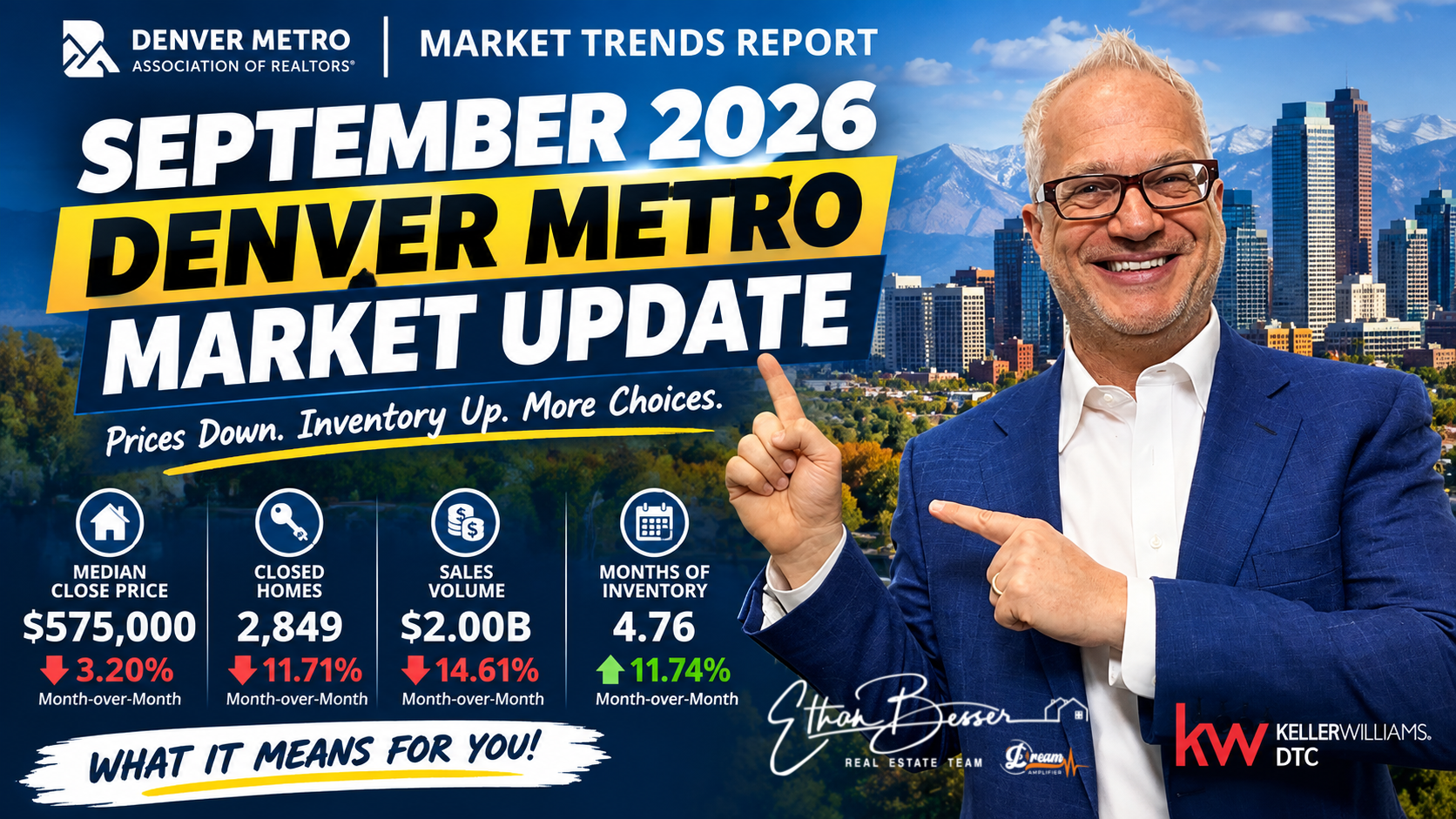
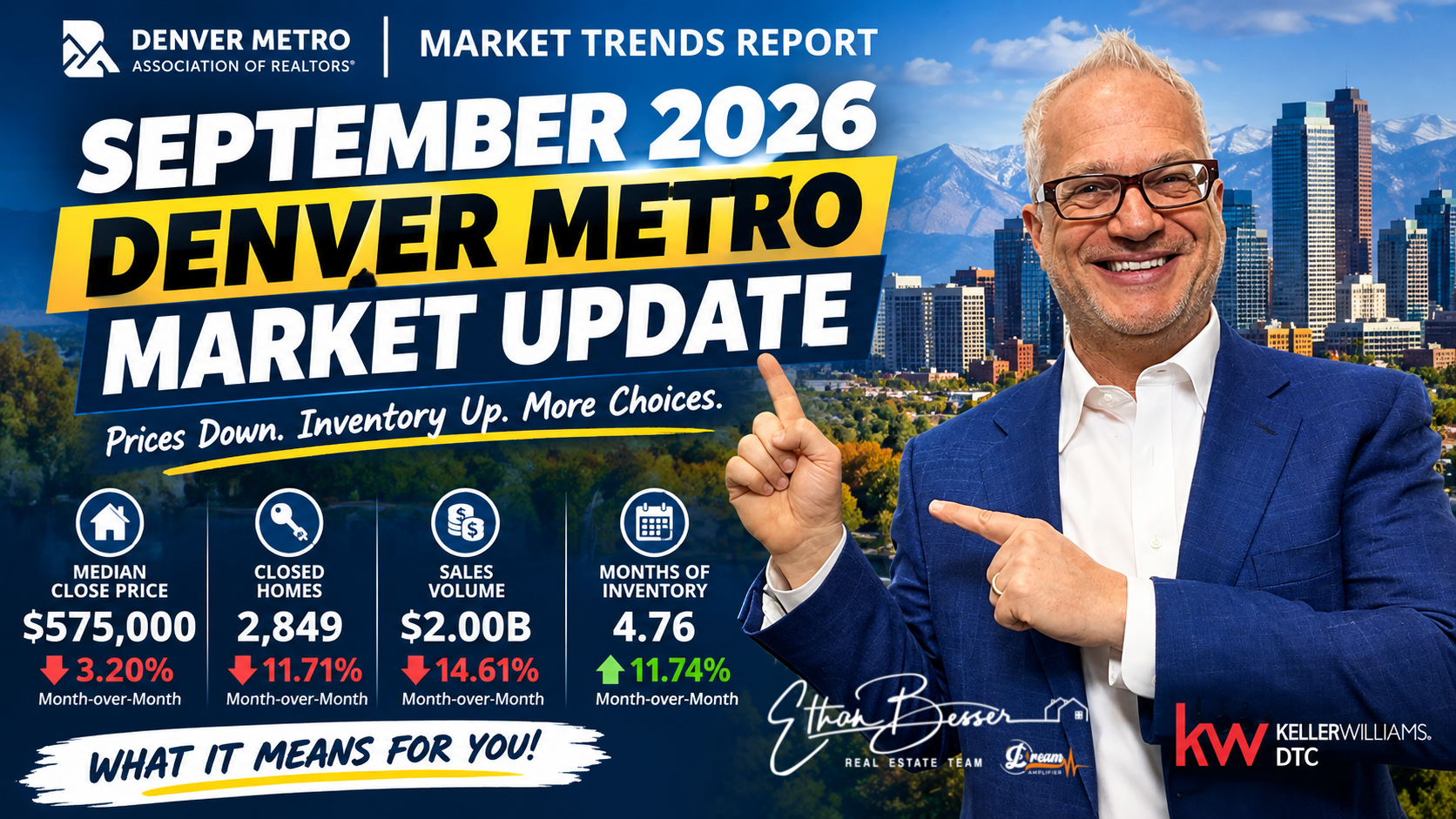
According to the latest Denver Metro Association of REALTORS® Market Trends Report, the median close price for residential properties fell to $575,000, a 3.20% decrease from August.
At the same time, inventory continued to build, homes took longer to sell, and the number of completed sales declined.
For buyers, this creates a market with more breathing room. For sellers, it makes pricing and preparation more important than ever.
Home Prices Continue to Adjust
September's $575,000 median close price represents a 3.20% month-over-month decline.
Looking back over the past several months, the trend becomes more noticeable:
- June: $616,000
- July: $605,000
- August: $594,495
- September: $575,000
That doesn't mean every Denver-area home is losing value at the same rate. Real estate is highly dependent on location, property type, condition, and price range.
But the broader market is clearly becoming more price-sensitive.
Inventory Is Giving Buyers More Options
Active listings increased to 13,567 homes, up 3.72% from August.
More importantly, months of inventory climbed to 4.76 months, an 11.74% increase.
This is one of the numbers buyers should be watching.
More available inventory generally means buyers have more properties to compare and less pressure to make an immediate decision.
It can also create opportunities for buyers to negotiate on price, concessions, inspection items, or other terms.
Homes Are Taking Longer to Sell
Perhaps one of the clearest signs of the changing market is the increase in days on market.
The September median was 32 days, compared with:
- 14 days in May
- 18 days in June
- 21 days in July
- 27 days in August
- 32 days in September
In other words, the typical home is now taking more than twice as long to sell as it did just a few months ago.
That doesn't mean homes aren't selling.
It means buyers have become more selective and are taking more time before committing.
Sales Activity Has Slowed
September also saw fewer completed transactions.
There were 2,849 closed sales, down 11.71% from August.
Total sales volume fell to $2.00 billion, a 14.61% decrease.
Pending sales also declined 6.07% to 2,908.
Meanwhile, new listings were essentially unchanged at 4,887, down just 0.06%.
That combination is particularly interesting.
Inventory isn't rising because a massive wave of new properties suddenly entered the market. Instead, properties are generally staying on the market longer.
What Does This Mean for Buyers?
For buyers, September's numbers offer some encouraging news.
There is more inventory to choose from, homes are taking longer to sell, and sellers may have less leverage than they did in a highly competitive market.
That can give buyers more time to evaluate properties and potentially negotiate more favorable terms.
But opportunity doesn't mean every home is a bargain. The right property at the right price can still attract strong competition.
What Does This Mean for Sellers?
Sellers need to adjust to the market they're actually in, rather than the market they remember.
Pricing a home correctly from the beginning is increasingly important.
Presentation, condition, marketing, and strategy can all influence how quickly a property sells.
A home that is priced appropriately and positioned well can still stand out, even as buyers become more selective.
The Bottom Line
September continues a trend we've been watching throughout 2026:
Prices are moving lower.
Inventory is increasing.
Homes are taking longer to sell.
Sales activity is slowing.
The Denver Metro market is becoming more balanced, and buyers are gaining leverage.
But remember, Denver Metro is a big market. What happens across the entire metro area doesn't necessarily tell you what is happening in your neighborhood.
If you're considering buying, selling, or simply want to understand what your home may be worth in today's market, a neighborhood-specific analysis can give you a much clearer picture.
Want to know what the numbers look like in your neighborhood? Contact Ethan Besser for a personalized market analysis.
Data source: Denver Metro Association of REALTORS® / REColorado, September 2026 residential market data, month-over-month.
https://youtu.be/Mkzxxlxv1jw